
If you’ve ever visited Paris, chances are you’ve wandered through the Luxembourg Gardens, pulled one of those iconic green chairs into the sunshine, and sat for a while watching Parisian life unfold.
But have you ever wondered what those chairs have witnessed?
Love stories. Arguments. Families gathering. People reading alone in the sunshine. Friends meeting for coffee. Tourists resting their feet. Generations of Parisians simply sitting and watching the world go by.
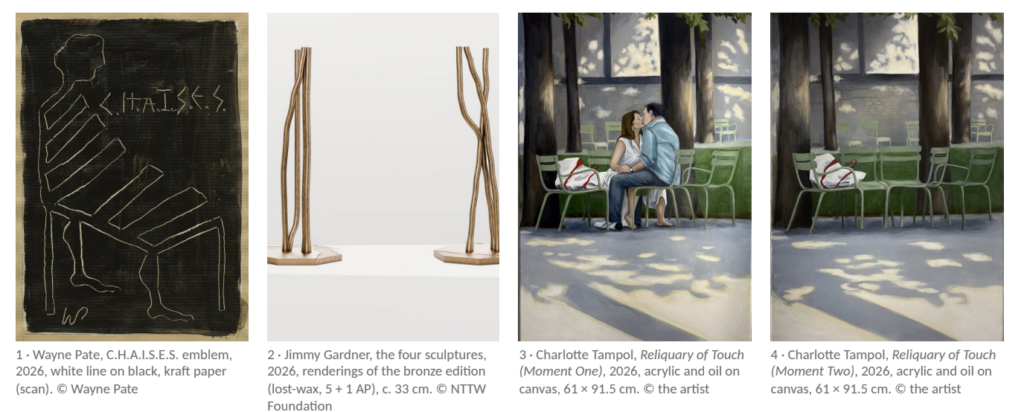
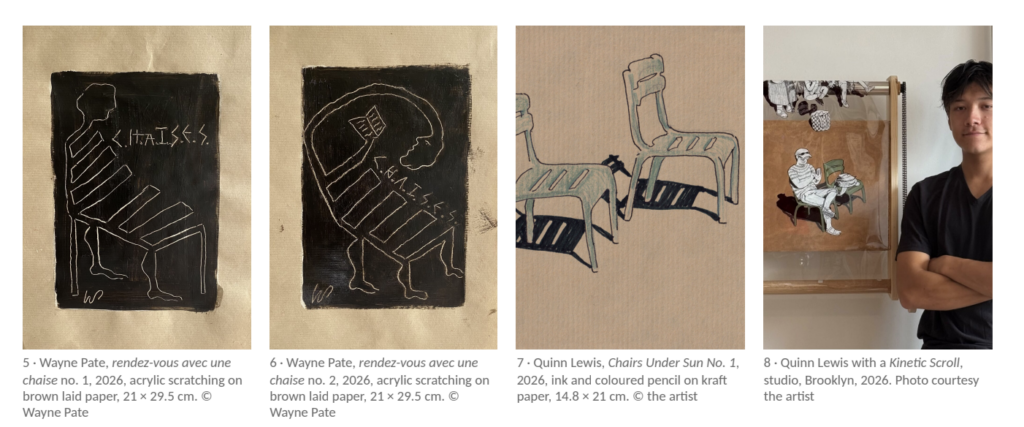
That simple idea is at the heart of C.H.A.I.S.E.S. — The Social Geometry of the Luxembourg Gardens, a new Paris art exhibition bringing together six artists to explore human connection, public space, movement, and the extraordinary stories hidden inside one of Paris’s most ordinary objects.
On this episode of La Vie Creative Podcast, I sat down with Jimmy Gardner of the New to the Wall Foundation and artist Allard van Hoorn to talk about the exhibition, creativity in Paris, and why the humble Luxembourg Gardens chair can tell us so much about the way we live.
The Story Behind the Green Chairs of the Luxembourg Gardens
The green chairs of the Jardin du Luxembourg have become almost as recognizable as the garden itself.
Unlike a traditional park bench, these chairs can be moved.
Visitors pull them into the sunshine. Couples turn two chairs toward one another. Families create circles. Someone reading a book might move a chair away from everyone else.
Every morning, the chairs begin again.
And throughout the day, their arrangement changes according to the people who use them.
Jimmy became fascinated by those constantly changing configurations while spending time in the Luxembourg Gardens.
Instead of seeing chairs, he began seeing a kind of social geometry.
The way the chairs moved around the garden became a physical representation of the way humans naturally gather, separate, connect and create temporary spaces of their own.
That observation eventually became the starting point for an entire art exhibition.
Turning Everyday Paris Into Art
One of my favorite ideas from our conversation was the idea of learning to notice the ordinary again.
When you first arrive in Paris, everything feels extraordinary.
You notice the architecture. You stare at the Eiffel Tower. You photograph café terraces, balconies and beautiful old doors.
But when you live somewhere long enough, even Paris can become normal.
I’ve lived in Paris for years, and I understand that feeling completely.
The Eiffel Tower becomes something you pass on the way to work. The beautiful buildings become your neighborhood. Those famous green chairs become simply…chairs.
C.H.A.I.S.E.S. asks us to look again.
As Allard explained during our conversation, the challenge is taking something Parisians see every day and presenting it from enough different perspectives that people begin to reconsider it.
The ordinary becomes extraordinary again.
And isn’t that exactly what creativity is?
Sometimes inspiration isn’t about discovering something nobody has ever seen.
It’s about seeing something everyone has seen — differently.
Six Artists, One Iconic Paris Object
The exhibition brings together six artists:
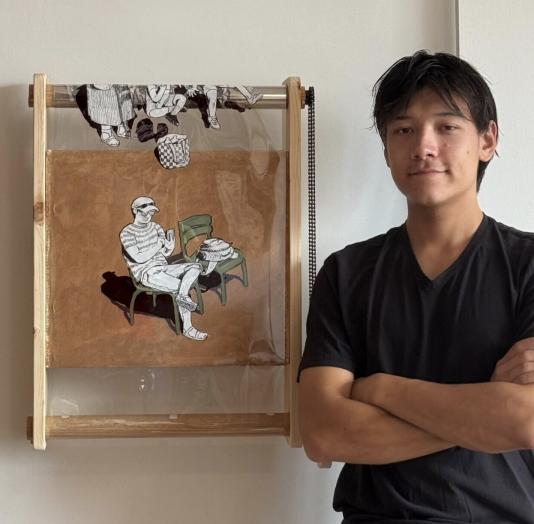
Jimmy Gardner, Allard van Hoorn, Quinn Lewis, Charlotte Tampol, Jessica Anne Schwartz and Wayne Pate.
Instead of asking every artist to interpret the chairs in the same way, the project encouraged experimentation and play.
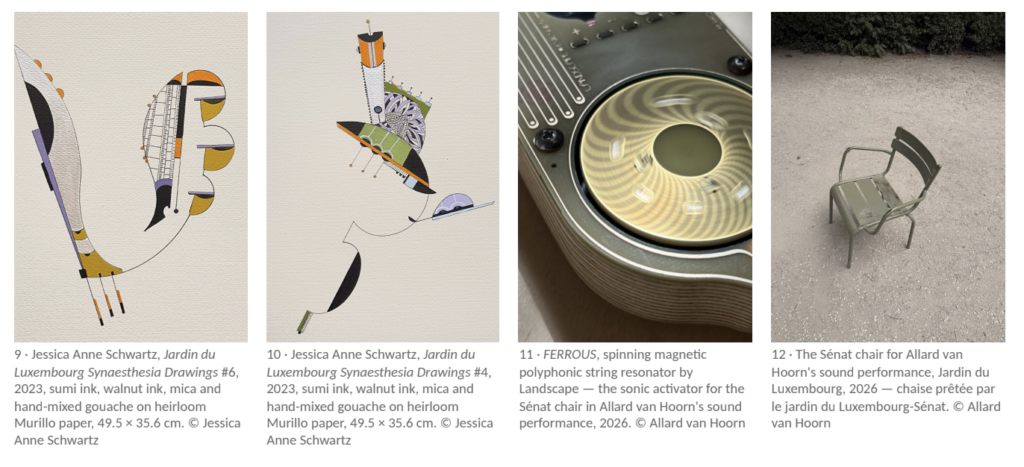
The result spans sculpture, painting, drawing, kinetic work, data, sound and performance.
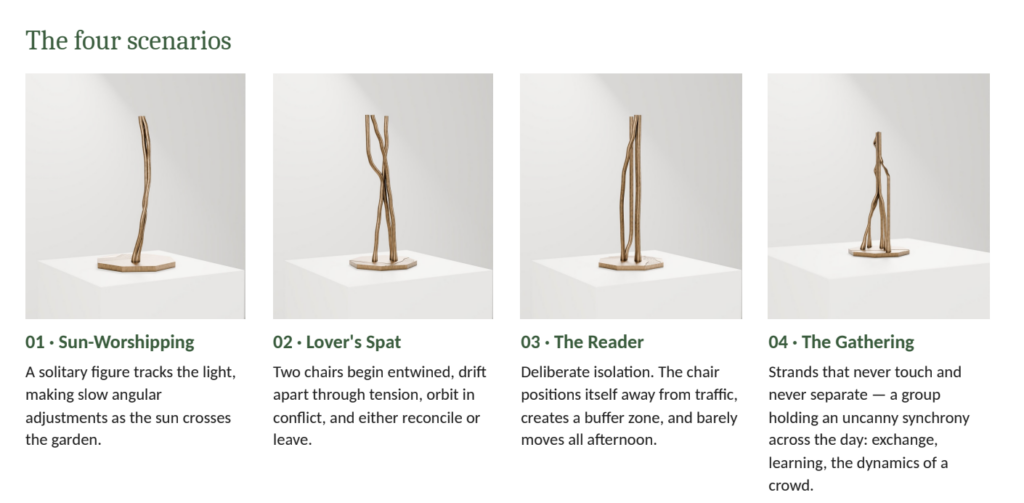
The artists explored four recurring social situations observed through the movement of the chairs:
The solitary reader.
The sunbather.
The lovers’ spat.
The gathering.
These simple moments became a framework for examining how people occupy public spaces and how our movements create invisible patterns around us.
What If the Chairs Could Remember Us?
One of the most fascinating parts of the exhibition comes from Allard van Hoorn.
His sound work imagines that the chairs themselves have absorbed the conversations, emotions and experiences of the thousands of people who have occupied them.
His project uses vibration and sound to symbolically release those accumulated stories back into the gallery.
It’s a beautiful idea.
Imagine everything one Luxembourg Gardens chair might have experienced.
First dates.
Breakups.
Marriage proposals.
Arguments.
Children playing.
Someone receiving wonderful news.
Someone receiving terrible news.
Tourists seeing Paris for the first time.
Parisians sitting in exactly the same spot they’ve visited for decades.
The chair doesn’t move very far.
But the world constantly moves around it.
The Luxembourg Gardens as a Parisian Living Room
The conversation also made me think differently about why movable chairs matter.
Most cities give you a bench.
The bench decides where you sit.
It decides which direction you face.
It decides how close you are to the person beside you.
But in many Parisian gardens, you can move your chair.
That tiny amount of freedom changes the way people interact.
You can create your own temporary living room in the middle of a public garden.
A person might have one chair for themselves, another for their bag, another for their feet and another for their coffee.
A group of friends can pull several chairs together.
A couple can turn away from everyone else and create a tiny private world inside one of Paris’s busiest gardens.
Public space temporarily becomes personal space.
Paris, Creativity and the Art of Slowing Down
We also talked about something that feels increasingly important: slowing down.
Our phones are constantly demanding our attention.
Emails.
Messages.
Instagram.
News.
Notifications.
Work.
We can walk through one of the most beautiful cities in the world while barely looking up.
A chair offers another possibility.
Sit.
Read.
Talk.
Watch.
Listen.
Do absolutely nothing.
Jimmy talked about deliberately putting his phone away while sitting in the Luxembourg Gardens and simply observing the world around him.
In a city filled with extraordinary monuments, sometimes one of the most Parisian experiences possible is simply sitting in a garden and watching life happen.
Art as a Relationship, Not a Transaction
Jimmy’s story is also fascinating because he didn’t begin his career as a traditional art-world insider.
His journey started as a collector.
Through collecting, he discovered that the part he loved most wasn’t simply owning artwork — it was meeting artists and building relationships with them.
That philosophy eventually helped inspire the New to the Wall Foundation.
Jimmy described the foundation’s approach beautifully during our conversation: art doesn’t have to be purely transactional.
Collecting can create friendships.
Exhibitions can create communities.
Artists, collectors and audiences can become part of one another’s stories.
And C.H.A.I.S.E.S. itself became exactly that kind of community project, with friends and family helping bring the exhibition to life.
A Creative Community in Paris
This idea particularly resonated with me because it’s something I love about Paris.
Despite being one of the world’s great capitals, Paris can sometimes feel like a collection of villages.
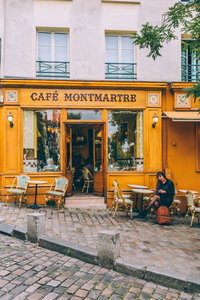
I live in Montmartre, and there is still something wonderfully neighborhood-like about life here.
You know people.
You talk to your neighbors.
You see the same café owners.
You recognize the people walking their dogs.
And creativity often grows through exactly those kinds of relationships.
C.H.A.I.S.E.S. grew organically from conversations, friendships, artists meeting artists, collectors supporting creators, and people simply saying:
Let’s make something.
That’s what La Vie Creative is about too.
C.H.A.I.S.E.S. Paris Exhibition: Dates & Location
If you’re looking for things to do in Paris in October 2026, especially during Art Basel Paris, add this exhibition to your list.
C.H.A.I.S.E.S. — The Social Geometry of the Luxembourg Gardens
📍 24 Rue Chapon, Paris — Le Marais
📅 October 20–22, 2026
🥂 Opening / Vernissage: Tuesday, October 20, 5:00–8:00 PM
🎨 Admission: Free
The exhibition is a short three-day pop-up taking place just as the international art world arrives in Paris for Art Basel Paris.
Listen to the Full La Vie Creative Podcast Episode
In the full conversation, Jimmy Gardner and Allard van Hoorn share much more about the origins of C.H.A.I.S.E.S., creating an exhibition in Paris, supporting emerging artists, public spaces, creativity, human connection and the unexpected artistic possibilities of everyday life.
And the next time you walk through the Luxembourg Gardens, look at those green chairs.
Notice where they’ve been moved.
Notice who’s sitting together.
Notice the empty chair sitting slightly apart from the others.
Ask yourself how it got there.
Because sometimes creativity begins with something incredibly simple:
Paying attention.